Introduction
Florida summers have a personality of their own. The sunshine is bright, the air can feel heavy with humidity, and even a quick walk outside can leave you reaching for something cold. On days like these, a tropical smoothie isn’t simply a tasty drink—it can become one of the easiest ways to turn seasonal fruit into a refreshing breakfast, afternoon snack, or post-workout treat.
The beauty of smoothies is their flexibility. You don’t need complicated equipment, exotic ingredients, or a long recipe. A handful of ripe fruit, something creamy, a splash of liquid, and a blender can create an impressive drink in minutes.
But there’s a little more to making a great smoothie than throwing everything into a blender. The best combinations balance sweetness, acidity, texture, temperature, and nutrition. Think of the blender as a small kitchen orchestra: every ingredient needs to play the right role.
This guide explores easy tropical smoothie recipes designed for hot Florida days, along with practical techniques for creating refreshing combinations at home.
Why Tropical Smoothies Are Perfect for Florida Summers
Hydration Meets Refreshment
Hot weather increases the appeal of foods and drinks with high water content. Fruits such as watermelon, pineapple, oranges, and strawberries naturally contribute fluid while adding flavor.
A smoothie can also incorporate coconut water, regular water, or milk alternatives to create a thinner, more refreshing consistency.
Of course, smoothies shouldn’t replace plain water as your primary source of hydration. Instead, think of them as a delicious complement to your normal fluid intake.
Seasonal Fruit and Natural Flavor
Summer is an excellent time to experiment with fruit-forward combinations.
Mango brings richness. Pineapple provides acidity. Berries add brightness. Coconut creates creaminess. Lime cuts through sweetness.
The result can taste complex without requiring complicated cooking techniques.
How to Build the Perfect Tropical Smoothie
Choose a Creamy Base
Your liquid base controls the texture and overall character of the smoothie.
Popular choices include:
- Coconut milk
- Almond milk
- Oat milk
- Dairy milk
- Greek yogurt
- Coconut water
For a rich dessert-like smoothie, coconut milk works beautifully. For something lighter after a hot afternoon outside, coconut water may be a better choice.
Add Fresh or Frozen Fruit
Fruit provides most of the flavor, natural sweetness, color, and texture.
Mango, pineapple, banana, berries, peaches, passion fruit, and watermelon are particularly useful for tropical combinations.
Why Frozen Fruit Works So Well
Frozen fruit is one of the easiest smoothie shortcuts.
It chills the drink without requiring large amounts of ice, and it often produces a thicker texture. Frozen mango, pineapple, and strawberries can transform an ordinary smoothie into something closer to a chilled tropical dessert.
There’s another advantage: frozen fruit is available year-round, so you don’t have to wait for peak season.
Balance Sweetness and Acidity
A smoothie that contains only sweet ingredients can quickly become heavy.
That’s where acidic ingredients come in.
Fresh lime juice, lemon juice, passion fruit, or tart berries can brighten the flavor and create balance. Start with a small amount and adjust gradually.
It’s similar to seasoning a savory dish: sometimes a tiny addition changes the entire experience.
Easy Tropical Smoothie Recipes
Classic Mango Pineapple Smoothie
This combination is practically summer in a glass.
Blend together:
- 1 cup frozen mango
- 1 cup frozen pineapple
- ¾ cup coconut water
- ½ banana
- A squeeze of fresh lime juice
Blend until smooth and creamy.
If the mixture is too thick, add more coconut water. If it tastes overly sweet, increase the lime slightly.
The mango provides body while pineapple brings a sharper tropical note.
Strawberry Banana Coconut Smoothie
For something familiar with a tropical twist, combine strawberries, banana, and coconut.
Use:
- 1 cup frozen strawberries
- 1 banana
- ¾ cup coconut milk
- ½ cup Greek yogurt
- 1 teaspoon honey, if needed
Blend until smooth.
The banana creates natural creaminess, while coconut milk adds a subtle island-inspired flavor.
Pineapple Coconut Lime Smoothie
This is a particularly refreshing choice for humid afternoons.
Combine:
- 1½ cups frozen pineapple
- ¾ cup coconut water
- ¼ cup coconut milk
- Juice of ½ lime
- A few fresh mint leaves
Blend thoroughly and taste before adding anything else.
The combination of pineapple and lime creates a bright, almost sparkling flavor even though the smoothie contains no carbonation.
Watermelon Mango Cooler
Watermelon is naturally juicy, making it an excellent summer smoothie ingredient.
Try:
- 1½ cups chilled watermelon
- 1 cup frozen mango
- Juice of ½ lime
- A few mint leaves
- A small handful of ice
Blend until smooth.
Because watermelon contains so much water, you don’t need much additional liquid. This makes the drink particularly light and refreshing.
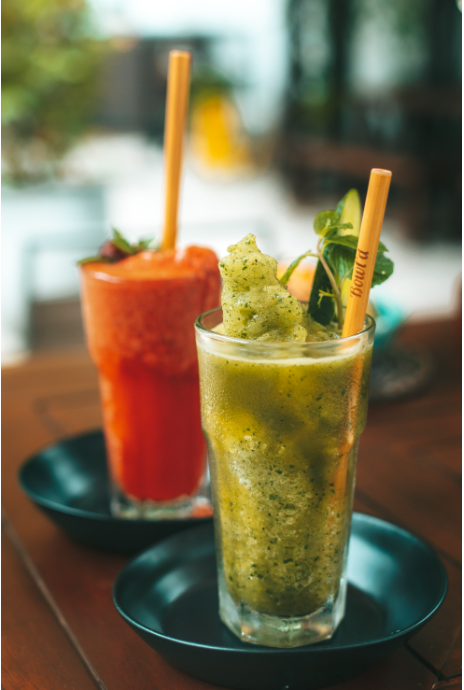
Peach Passion Fruit Smoothie
For a more sophisticated tropical profile, combine sweet peaches with tangy passion fruit.
Use:
- 1 cup frozen peaches
- ½ cup passion fruit pulp
- ¾ cup coconut water
- ½ banana
- A squeeze of lime
Blend until creamy.
Passion fruit has an intense tartness, so start conservatively and adjust according to taste.
Protein-Rich Tropical Smoothies
Greek Yogurt Tropical Blend
A smoothie can serve as a more substantial breakfast when paired with a protein-rich ingredient.
Blend:
- 1 cup frozen mango
- ½ cup frozen pineapple
- ¾ cup Greek yogurt
- ½ cup milk or coconut water
- 1 tablespoon chia seeds
- Lime juice to taste
Greek yogurt adds protein and a creamy consistency, while chia seeds provide additional fiber.
This is an excellent option when you want something more filling than a fruit-only smoothie.
Tropical Peanut Butter Smoothie
Peanut butter might not sound tropical at first, but it pairs surprisingly well with banana and coconut.
Try:
- 1 banana
- 1 cup frozen mango
- 1 tablespoon peanut butter
- ¾ cup oat milk
- ½ cup Greek yogurt
- A pinch of cinnamon
Blend until completely smooth.
The peanut butter adds richness and makes the smoothie more satisfying, while mango prevents the combination from becoming too heavy.
How to Make Smoothies More Nutritious
Adding Fiber and Healthy Fats
Fruit already provides fiber, but you can increase the nutritional density with ingredients such as:
- Chia seeds
- Ground flaxseed
- Oats
- Nut butter
- Avocado
- Greek yogurt
The key is moderation. Adding too many ingredients can turn a refreshing smoothie into an unnecessarily dense meal.
Start with one or two additions and evaluate the texture.
Choosing Natural Sweeteners
Ripe fruit often provides enough sweetness on its own.
If additional sweetness is necessary, consider a small amount of honey, maple syrup, or a naturally sweet fruit such as banana or dates.
Taste first, sweeten second.
This simple habit can prevent unnecessary added sugar.
Smoothie Tips for Florida’s Hot Weather
Keeping Ingredients Cold
Temperature matters.
Store fruit in the refrigerator before blending and keep frozen ingredients ready in your freezer. Chilled ingredients reduce the need for excessive ice, which can dilute flavor.
For an especially cold smoothie, freeze sliced bananas, mango chunks, or grapes in advance.
Preparing Smoothies Ahead of Time
Freshly blended smoothies generally have the best texture and flavor.
However, you can prepare ingredient packs ahead of time. Portion fruit and other solid ingredients into freezer-safe containers or bags, then add your liquid and blend when needed.
This approach turns a busy morning into a two-minute breakfast routine.
Common Tropical Smoothie Mistakes
Several small mistakes can affect the final result.
Using Too Much Ice
Ice can make a smoothie watery as it melts. Frozen fruit is usually a better way to create thickness and chill.
Adding Too Much Liquid
Start with less liquid than you think you’ll need. You can always add more, but removing excess liquid is nearly impossible.
Overloading the Blender
Too many ingredients can create a thick, uneven mixture.
Keep the recipe simple. Three to six primary ingredients are often enough.
Ignoring Flavor Balance
Sweet fruit needs acidity. Creamy ingredients benefit from brightness. A little lime juice can completely transform a flat-tasting smoothie.
Adding Sweeteners Automatically
Don’t assume every smoothie needs honey or syrup. Taste it first. Ripe fruit can provide plenty of natural sweetness.
Conclusion
Easy tropical smoothies are an ideal match for hot Florida days because they combine refreshing textures, vibrant fruit flavors, and nearly endless flexibility. Whether you prefer the classic combination of mango and pineapple, the creamy richness of coconut and banana, or the sharper flavor of passion fruit and lime, you can create a satisfying drink without spending much time in the kitchen.
The real secret is balance. Start with quality fruit, choose a suitable liquid base, use frozen ingredients for natural chill, and add acidity when the flavors need brightness. From there, ingredients such as Greek yogurt, chia seeds, oats, or nut butter can turn a simple fruit smoothie into a more substantial option.
Most importantly, don’t overcomplicate it. Florida’s summer heat already provides enough intensity. Your smoothie should be the opposite: cool, simple, colorful, and refreshing.